 Image 1 of 1
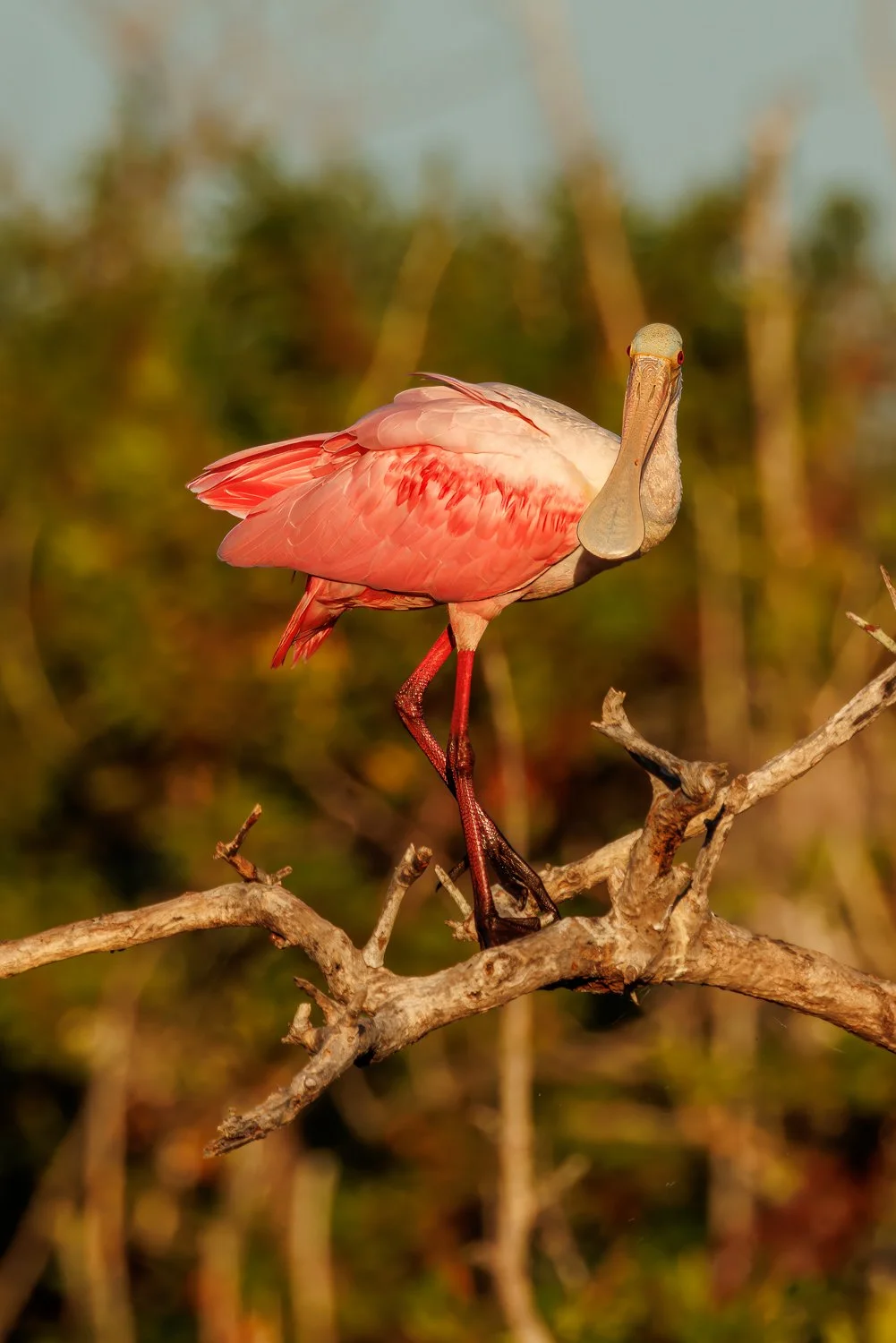
Sanibel Island, Florida. Few birds inspire the kind of astonished delight that a Roseate Spoonbill provokes. That improbable pink plumage, the absurdly shaped bill, the prehistoric bearing — everything about this species seems designed to make people stop and stare. I was photographing wading birds in a Sanibel Island lagoon when this spoonbill took a brief break from feeding.
Spoonbills feed with their heads down, sweeping that spatulate bill through the water to catch small fish and crustaceans by touch. Photographing them while feeding often results in images of headless pink bodies, so I wait for these brief pauses when they raise their heads. This moment was good — the bird alert, the light soft and flattering to the pink tones, the composition clean.
The pink coloring comes from the carotenoid pigments in the crustaceans they eat — the same reason flamingos are pink. Young spoonbills are actually pale, only developing their full rosy plumage as they mature. This individual displays the rich coloring of an adult in prime condition, with that vivid pink deepening to a carmine red on the wing shoulders.
These birds were nearly hunted to extinction in the late 1800s for their feathers, which were prized for ladies' hats. Their recovery is one of conservation's success stories, though they remain uncommon enough that every sighting feels like a gift.
Limited edition Chromaluxe metal print. Ultra gloss finish recommended to make the pink and carmine plumage glow.
Sanibel Island, Florida. Few birds inspire the kind of astonished delight that a Roseate Spoonbill provokes. That improbable pink plumage, the absurdly shaped bill, the prehistoric bearing — everything about this species seems designed to make people stop and stare. I was photographing wading birds in a Sanibel Island lagoon when this spoonbill took a brief break from feeding.
Spoonbills feed with their heads down, sweeping that spatulate bill through the water to catch small fish and crustaceans by touch. Photographing them while feeding often results in images of headless pink bodies, so I wait for these brief pauses when they raise their heads. This moment was good — the bird alert, the light soft and flattering to the pink tones, the composition clean.
The pink coloring comes from the carotenoid pigments in the crustaceans they eat — the same reason flamingos are pink. Young spoonbills are actually pale, only developing their full rosy plumage as they mature. This individual displays the rich coloring of an adult in prime condition, with that vivid pink deepening to a carmine red on the wing shoulders.
These birds were nearly hunted to extinction in the late 1800s for their feathers, which were prized for ladies' hats. Their recovery is one of conservation's success stories, though they remain uncommon enough that every sighting feels like a gift.
Limited edition Chromaluxe metal print. Ultra gloss finish recommended to make the pink and carmine plumage glow.